The Ultimate Guide to Choosing a J1772 EV Charging Cables in 2026 (Buyer's Guide)
If you drive a non-Tesla EV in North America—or a Tesla with a J1772 adapter—a SAE J1772 charging cable is the most versatile piece of charging hardware you can own.u can buy in 2026. It is the universal connector for every Level 1 and Level 2 public charging station on the continent, and it remains the safest bet for future-proofing your home setup even as NACS continues its rollout.
This guide walks you through everything you need to know to choose the right J1772 charging cable: from understanding your vehicle's actual charging limit, to matching amperage with your home's electrical panel, to the safety certifications that separate reliable equipment from marketplace risks.
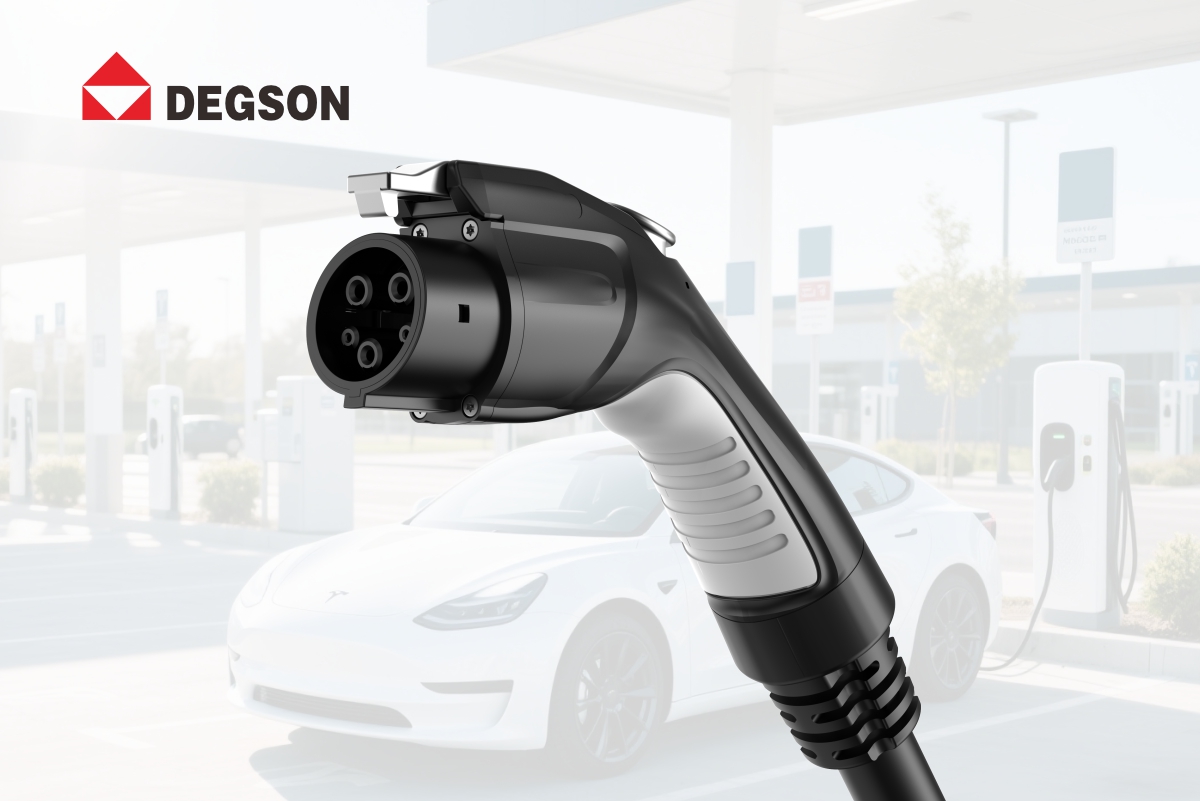
Why J1772 Still Wins in 2026
Despite the industry's shift toward NACS, J1772 remains the dominant connector for all non-Tesla EVs in North America. Chevrolet, Ford, Hyundai, Kia, BMW, Volkswagen, Nissan, and most other brands continue to ship J1772 inlets on 2024-and-earlier models, and many 2025–2026 models still include a J1772-to-NACS adapter in the box.
Here's the practical reality:
-
Every public Level 2 station in North America uses J1772. NACS vehicles work with J1772 chargers via the included adapter.
-
A J1772 charger works with every EV on the road. Tesla drivers simply use a $15–$50 J1772-to-NACS adapter, with zero technical penalty on charging speed or safety.
-
If you switch vehicles in the next 3–5 years, a J1772 charger stays universally compatible.
Step 1: Match Amperage to Your Vehicle's Onboard Charger
Your EV has a built-in AC-to-DC converter (the "onboard charger" or OBC) that limits how fast it can accept AC power. No charger can push more power than your OBC allows. Matching amperage to your OBC is the single most important decision:
| Onboard Charger | Best Match | Example Vehicles | Approx. Power |
|---|---|---|---|
| 6.6–7.7 kW (28–32A) | 32A charger | Chevy Bolt, Mustang Mach-E, Nissan Leaf, Hyundai Kona | ~7.7 kW |
| 9.6–11.5 kW (40–48A) | 48A charger | Ioniq 5/6, EV6/EV9, ID.4, Tesla Model 3/Y, BMW i4 | ~11.5 kW |
Don't overspend on 48A if your car caps at 32A. You'll never see the difference in charging speed, but you'll pay more upfront and require a larger circuit.
For reference, DEGSON's J1772/TYPE 1 charging cable is available in 32A, 40A, 50A, and 80A configurations at 240V, giving you headroom to match virtually any vehicle's OBC—from a compact daily commuter to a high-capacity dual-charger setup.
Step 2: Verify Your Home's Electrical Capacity
Before ordering, you must confirm your electrical panel can support the charger. This is where most buyers get it wrong:
-
A 32A charger needs a dedicated 40A circuit with proper grounding
-
A 48A charger requires a 60A breaker per NEC 625's 125% continuous-load rule
-
16A portable units can plug into a NEMA 6-20 outlet, but the circuit must be verified by a qualified electrician
Step 3: Choose Portable vs. Hardwired
Portable plug-in chargers (with NEMA 14-50 or NEMA 6-20 plugs) offer easy installation and relocation—ideal for renters, flexibility to charge at home or on road trips, and typically 16A–40A output.
Hardwired wall-mounted units offer cleaner permanent installation, support for higher amperage (48A–80A), and better weather sealing for outdoor use.
Step 4: Safety Certifications Are Non-Negotiable
In the United States, every EV charging device must comply with UL 2594—the core safety standard for Electric Vehicle Supply Equipment (EVSE) covering conductive charging equipment with input voltages up to 1000V AC.
Uncertified chargers are a genuine fire hazard. The U.S. CPSC has issued multiple alerts about counterfeit and uncertified EV charging equipment. A UL 2594 listing requires 37 distinct failure-mode tests. If it doesn't say "UL 2594" on the nameplate, it's not certified for EV use.
Step 5: Durability & Environmental Ratings
Your charging cable lives in a harsh environment. Look for: IP54 minimum (DEGSON's units achieve Type 4 protection), operating temperature range of at least -40°C to +50°C, mechanical life >10,000 mating cycles, and UL 94 V-0 flame-retardant housing.
Step 6: Cable Length & Ergonomics
A 25-foot cable is the industry standard. Pay attention to ergonomic grip designsign, thumb-operated unlock button, metal locking hook, and TPU cable jacket.
Why Consider DEGSON for Your J1772 Charging cable
DEGSON brings decades of expertise in electrical connection technology to the North American EV market. Their J1772/TYPE 1 AC charging cable is purpose-built for the exact requirements outlined in this guide:
Safety & Compliance: Multiple built-in protections (over-voltage, over-current, leakage detection), smart temperature monitoring, precision current management, and excellent electrical isolation.
Durability: Type 4 ingress protection, UL 94 V-0 flame-retardant thermoplastic housing, >10,000 mating cycles mechanical life, passes 1-meter drop and 2-ton vehicle crush testing, operating temperature -40°C to +50°C.
Current Range & Compatibility: Available in 32A / 40A / 50A / 80A at 240V. 100% compliant with SAE J1772 protocol. Works with Tesla via adapter.
Frequently Asked Questions (FAQ)
Q1: Can I use a J1772 charging cable for my Tesla in 2026?
Yes, absolutely. Every Tesla sold in North America comes with a J1772-to-NACS adapter. Simply plug the J1772 cable into the adapter, then connect it to your Tesla's charge port. There is zero loss in charging speed or safety.
Q2: What is the difference between J1772 and NACS, and which one should I choose?
J1772 is the long-standing SAE standard used by all non-Tesla EVs, while NACS is Tesla's connector. For 2026 buyers, J1772 remains the most versatile choice because it works with every EV on the road (Tesla drivers just need an inexpensive adapter).
Q3: Is UL 2594 certification really necessary?
UL 2594 certification is non-negotiable for safety and insurance purposes. Uncertified chargers have been linked to house fires. Always verify the UL file number on UL's Product iQ database before purchasing.
Q4: How do I know if my home's electrical panel can handle a 32A or 48A J1772 charger?
A 32A charger requires a dedicated 40A circuit, while a 48A charger requires a 60A breaker. We strongly recommend hiring a licensed electrician to evaluate your panel's available capacity before ordering.
Q5: What cable length should I choose, and is DEGSON's J1772 cable suitable for outdoor use?
A 25-foot cable is the industry standard. DEGSON's J1772 charging cables achieve Type 4 ingress protection, feature UL 94 V-0 flame-retardant housing, and operate reliably in temperatures from -40°°C to +50°°C, making them fully rated for permanent outdoor installation.


